
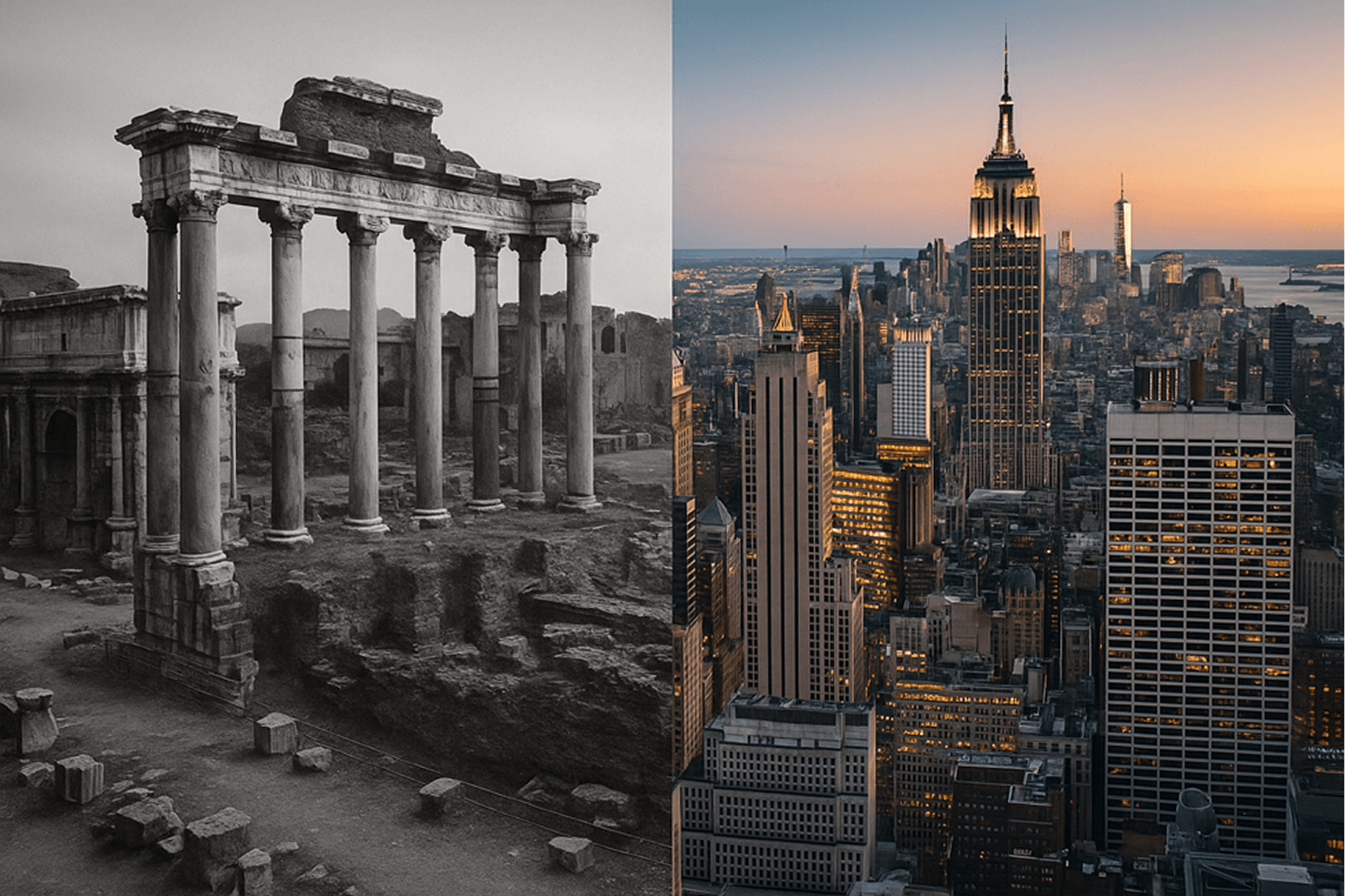
Every city carries two maps: the visible one of streets and skylines, and the invisible one of memory. The first can be redrawn overnight by cranes and bulldozers; the second resists erasure. Memory gives a city its moral geometry — a sense of who it has been, what it has lost, and how it chooses to begin again.
The Veridian Urban Index (VUI) reclaims this second map. It treats memory not as nostalgia but as infrastructure — a civic neural network that connects identity, legitimacy, and belonging. In an age when cities rise and vanish at digital speed, the ability to remember becomes the foundation of coherence.
The failure to remember is not only historical; it is institutional. Cities often repeat mistakes because they forget their own data, discard lessons, and erase the communities that hold their stories. The VUI’s Cultural and Identity Pillar restores that continuity by embedding collective memory into decision-making. It measures how public narratives are preserved, how histories are taught, how architecture and art anchor identity in place.
In doing so, Veridian helps cities see heritage as dynamic — not a frozen relic, but a living archive. A city that remembers can evolve without losing itself.
Forgetting is often a policy. Demolition justified as modernization, renaming sold as neutrality, archives neglected in the name of progress. But when memory is erased, injustice repeats. The Veridian framework counters this by transforming remembrance into resilience.
It prompts city leaders to ask: Who is represented in public space? Whose memory has been marginalized? How can new development repair old wounds? By converting those questions into measurable indicators, the VUI turns remembrance into governance — ethics translated into data.
Buildings are verbs before they are nouns — they act, they communicate, they endure. The Veridian approach views architecture as a language of memory: a dialogue between the city’s past and its present. It promotes adaptive reuse over erasure, integrating remnants of older structures into contemporary design.
Each preserved stone, each reinterpreted landmark becomes a sentence in the city’s evolving story. Memory, in this sense, is not about looking back but about staying whole while moving forward.
Just as ecosystems regenerate through feedback loops, cities regenerate through remembrance. The VUI transforms historical awareness into a design principle: policy built on memory tends to be fairer, architecture grounded in identity tends to last longer, and economies informed by history tend to avoid cycles of exploitation.
A city that remembers does not fossilize; it heals. Its continuity gives citizens confidence that progress will not demand amnesia. In Veridian’s lexicon, memory is the antidote to fragility — the invisible infrastructure that sustains moral coherence.